Basil pesto—does it get any better than this vibrant green sauce that bursts with flavor? Whether you’re tossing it with pasta, spreading it on a sandwich, or using it as a topping for grilled meats, basil pesto takes any dish to the next level. Its combination of fresh basil, garlic, and pecorino cheese creates an aromatic delight that can transform the simplest ingredients into something special. In this post, we’ll delve into how to make this classic Italian sauce and share a few tips to elevate your homemade version to gourmet status!
Print
Classic Basil Pesto
- Total Time: 10 minutes
- Yield: 4 servings 1x
- Diet: Vegetarian
Description
A vibrant green sauce bursting with flavor, perfect for pasta, sandwiches, or grilled meats.
Ingredients
- 2 cups fresh basil leaves, packed
- ½ cup extra virgin olive oil
- ¼ cup pine nuts (or walnuts for a twist)
- ½ cup grated Parmesan or Pecorino Romano cheese
- 3 cloves garlic, minced
- Salt and pepper to taste
- Optional: Juice of half a lemon
Instructions
- Begin by rinsing the fresh basil leaves under cold water.
- In a food processor, combine the basil leaves, pine nuts, and minced garlic. Pulse until roughly chopped.
- Slowly drizzle in the extra virgin olive oil while the food processor is running.
- Scrape down the sides and add the grated cheese. Pulse until combined.
- Season with salt and pepper to taste, and add lemon juice if desired.
Notes
Store in an airtight container for up to a week in the refrigerator, or freeze in ice cube trays for longer storage.
- Prep Time: 10 minutes
- Cook Time: 0 minutes
- Category: Sauce
- Method: Blending
- Cuisine: Italian
Nutrition
- Serving Size: 2 tablespoons
- Calories: 150
- Sugar: 0g
- Sodium: 150mg
- Fat: 15g
- Saturated Fat: 2g
- Unsaturated Fat: 10g
- Trans Fat: 0g
- Carbohydrates: 2g
- Fiber: 0g
- Protein: 2g
- Cholesterol: 5mg
Ingredients
Gathering the right ingredients is crucial for making the perfect basil pesto. Here’s what you’ll need:
- 2 cups fresh basil leaves, packed
- ½ cup extra virgin olive oil
- ¼ cup pine nuts (or walnuts for a twist)
- ½ cup grated Parmesan or Pecorino Romano cheese
- 3 cloves garlic, minced
- Salt and pepper to taste
- Optional: Juice of half a lemon for brightness
- Substitutions: Use sunflower seeds instead of nuts for nut-free alternatives; nutritional yeast can replace cheese for a vegan option.
The freshness of the basil is key here, and don’t skimp on good-quality olive oil. It makes a significant difference in flavor!
Timing
Preparation is quick when it comes to making basil pesto. Here’s a breakdown:
- Prep Time: 10 minutes
- Total Time: 10 minutes
This means you can whip up this delectable sauce in no time, making it perfect for a weeknight meal or a surprise guest!
How to Make Basil Pesto
Step 1: Begin by rinsing the fresh basil leaves under cold water. This helps remove any dirt or grit. Pat them dry gently with a kitchen towel or use a salad spinner.
Step 2: In a food processor, combine the basil leaves, pine nuts, and minced garlic. Pulse these ingredients together a few times until they are roughly chopped. This step enhances the herb’s flavor profile, and breaking down the garlic avoids overpowering the final taste.
Step 3: Slowly drizzle in the extra virgin olive oil while the food processor is running. This emulsifies the oil with the basil mixture, creating a creamy texture. Depending on your desired consistency, you may adjust how much oil you add.
Step 4: Scrape down the sides of the food processor with a spatula, then add in the grated cheese. Pulse the mixture again until everything is combined, with a thick yet smooth consistency. You want it creamy but still have some texture.
Step 5: Season with salt and pepper to taste. If you like a bit of acidity in your pesto, squeeze in half a lemon’s juice and give it one final mix.
Healthier Alternatives
For those seeking healthier options, consider these modifications:
- Swap out pine nuts for walnuts, which contain more omega-3 fatty acids.
- Use nutritional yeast in place of cheese for a vegan-friendly version full of umami flavor.
- Substitute some of the olive oil with vegetable broth to reduce calories while still keeping it moist.
Serving Suggestions
Basil pesto can truly shine in various dishes. Here are some serving ideas:
- Toss it with al dente pasta and garnish with additional cheese and a sprinkle of red pepper flakes for a bit of heat.
- Spread it on grilled chicken or fish right before serving to maintain that fresh, herbal flavor.
- Drizzle it over roasted vegetables for a mouthwatering side dish. Zucchini, asparagus, or bell peppers really benefit from that basil goodness!
- Serve it alongside crusty bread or as a dip for fresh veggies at your next gathering.
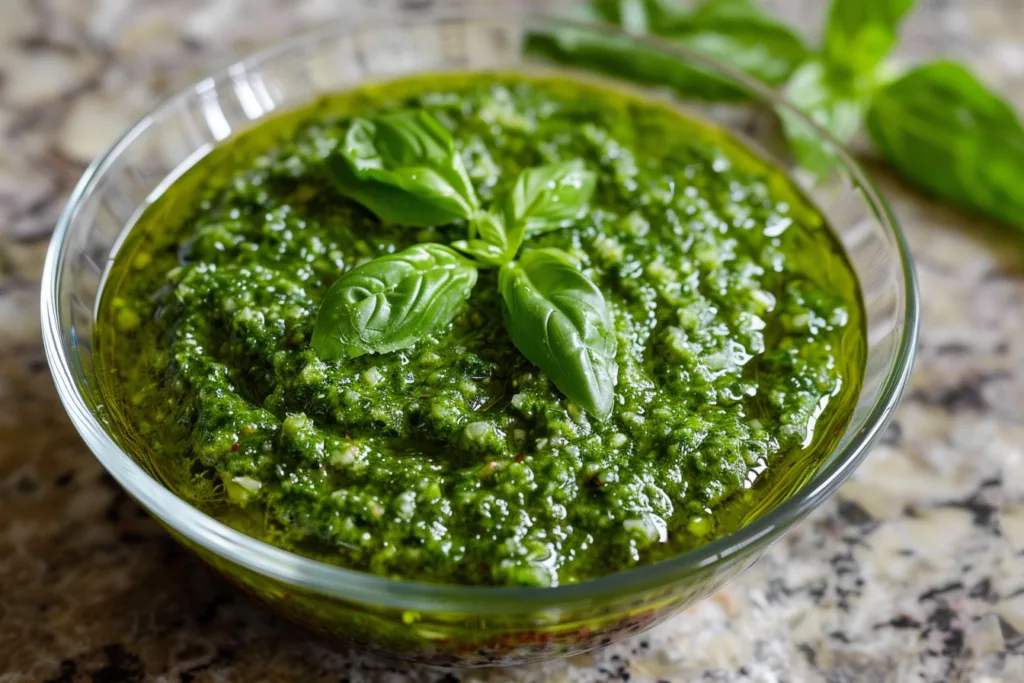
Don’t forget about presentation! A drizzle of olive oil and some whole basil leaves on top can make your dish look professionally styled.
Common Mistakes to Avoid
Even the pros make errors. Avoid these common pitfalls to ensure your basil pesto turns out perfect:
- Using wilted or discolored basil can result in a less vibrant and flavorful pesto. Always choose fresh, bright green leaves.
- Don’t skimp on the cheese. It provides essential flavor, so measure it out properly.
- Blending too long can lead to a paste instead of a textured sauce. Pulse, but don’t overdo it!
- Finally, season gradually. It’s easier to add salt than to correct an overly salty sauce.
Storage Tips
Storing your basil pesto properly can prolong its shelf life.
Refrigerator: Store the pesto in an airtight container, where it will last for up to a week. To avoid browning, drizzle a thin layer of olive oil on the surface before sealing the container.
Freezer: For longer storage, freeze your pesto in ice cube trays. Once frozen, transfer the cubes to a plastic bag or container. They’ll keep for about three months! Simply thaw what you need for later meals.
Reheating isn’t generally necessary, but if you do, warm it gently over low heat, so it doesn’t lose flavor or texture.
Frequently Asked Questions
Is basil pesto gluten-free?
Yes, basil pesto is naturally gluten-free as long as you use gluten-free pasta or bread when using it in dishes.
Can I use other herbs in pesto?
Absolutely! While basil is traditional, you can make pesto with parsley, cilantro, or even arugula for a unique flavor.
How long does homemade basil pesto last?
Homemade basil pesto can last in the fridge for up to a week when stored in an airtight container.
Can I make basil pesto without a food processor?
Yes! You can chop everything finely by hand and mix it in a bowl. It may take a bit longer, but the flavors will still shine!
What’s the best way to use leftover pesto?
Try it on sandwiches, as a marinade for meats, or even swirled into soups! The opportunities are endless.
Conclusion
Basil pesto isn’t just a sauce; it’s a gateway to a world of culinary creativity. Whether paired with pasta, grilled meats, or roasted veggies, the combination of flavors speaks for itself. So why not give this recipe a try? You’ll be amazed at how simple ingredients can create something beautifully rich and satisfying.